

Blog - no.18: A day in the Life of a Photographer - Archive Photography
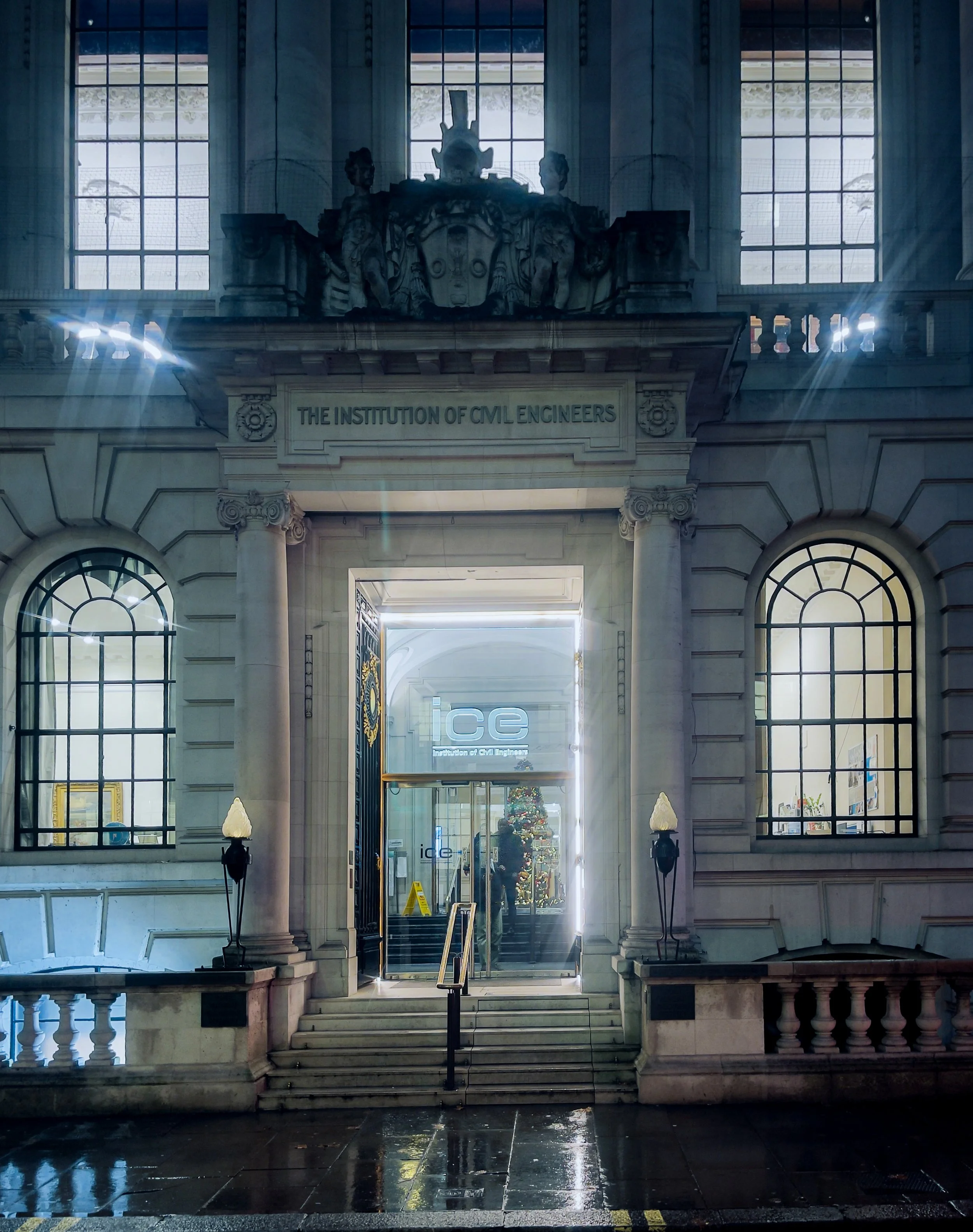
ICE Headquarters in Westminster
Yesterday I had the pleasure of working with the Institution of Civil Engineers at their Westminster headquarters in central London. My task was to photograph a selection of historic engineering drawings from their archive, all of which were far too large to be scanned. The archive is managed by Carol, whose dedication to preserving these documents is clear to see the moment you step into the room.
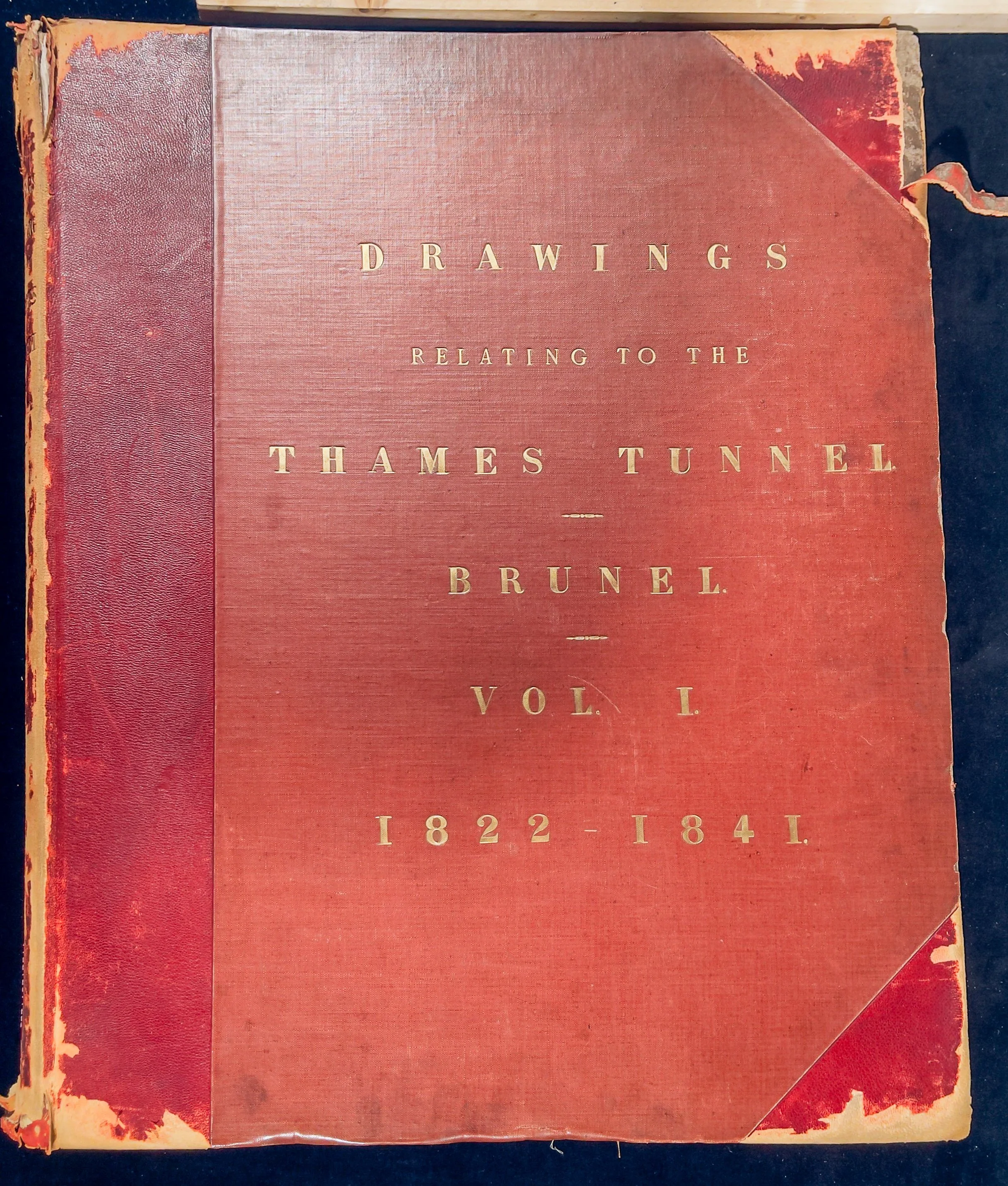
Incredible Drawings…
The drawings dated back as far as the early 1800s and included material from several major British infrastructure projects. Among them was a remarkable plan from Brunel’s Thames Tunnel, the first tunnel successfully constructed beneath a navigable river. Built between 1825 and 1843, it remains one of the most significant engineering feats of its time.
Most drawings were around A1 in size, although a few exceeded A0 and required more than one photograph to capture the full detail. Photographing documents of this scale is always a careful and deliberate process. It requires precise control of lighting and colour accuracy, along with a great deal of patience.
Handling historic works comes with its own responsibilities, so I made sure to use white gloves and take every precaution when moving the drawings. Avoiding reflections was a key part of the set up, which meant suspending a large black cloth above the camera to eliminate any unwanted glare from overhead lights or reflective surfaces.
Even, consistent lighting is essential for accurate reproduction. I used two lights positioned opposite each other at a 45 degree angle, spaced widely enough to avoid catching the lens. Ensuring the camera was perfectly parallel to the floor was another important step. A small mirror placed directly beneath the lens made it easy to check alignment using the camera’s screen markings.
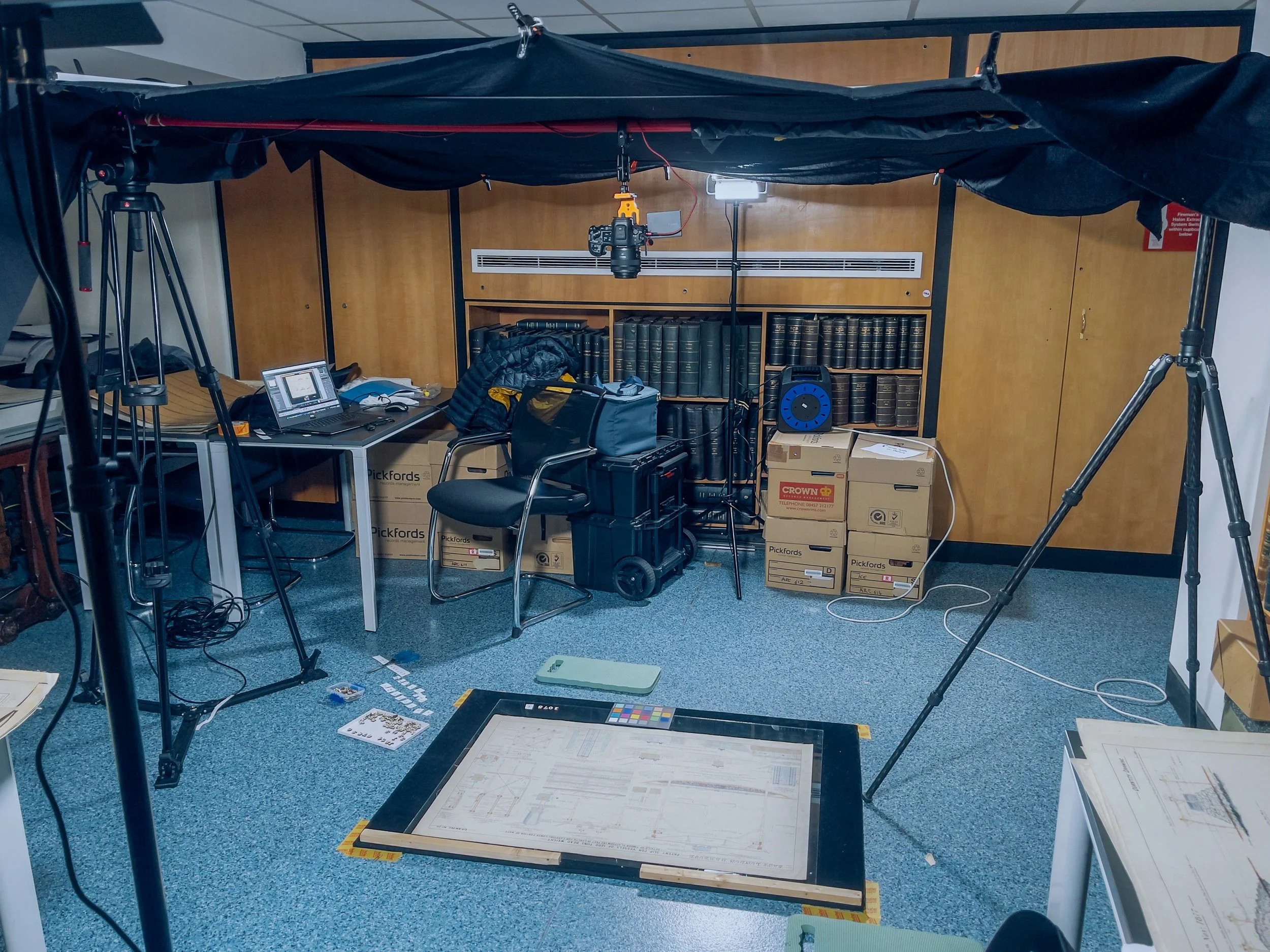
For the base, I used a custom board covered in black felt. Some drawings were curled or fragile, so I worked with a large pane of glass to keep them flat when required. Switching between glass and no glass can affect colour temperature because of the slight green tint caused by iron in the glass. Although subtle to the eye, it can shift the white balance by around 150 kelvins, so careful calibration was essential. A colour chart was placed in each frame to ensure future printers can easily match both RGB and CMY values.
A full frame 45 megapixel camera allowed me to produce detailed files of around 40 to 50 megabytes. Shooting tethered to a laptop through Adobe Lightroom meant I could review each image on a larger screen and trigger the camera remotely to avoid any vibrations.
It was a full and very enjoyable day, even if it did involve repeatedly kneeling, standing and checking each image with absolute precision. The journey into the heart of Westminster came with the added bonus of seeing the Christmas lights, even though I still have not yet put up my own decorations.
A big thank you to my photography friends Vic and Mike, who played an important part in preparing for this shoot, and to Carol at the ICE Archives for her patience, hospitality and for letting me take over most of her workspace for the day.
