

Blog - no.13: Minimalist Photography for Beginners: Finding Beauty in Simplicity
If you’ve ever felt overwhelmed trying to capture everything in one photo, minimalist photography might just be your new favorite approach.
It’s all about seeing more by showing less, using space, light, and simple subjects to tell a powerful story. The best part? You don’t need fancy gear. Whether you’re shooting with your phone or a camera, you can create stunning minimalist images by learning to slow down and focus in on what really matters.
What Is Minimalist Photography?
Minimalist photography is about simplicity and focus. Instead of filling the frame, you strip things back until only the essentials remain, one subject, one mood, one clear message.
Think of it like visual mindfulness. You’re removing distractions so the viewer’s eye goes exactly where you want it. A single leaf on concrete, a person in a wide open space, or the shadow of a tree on a wall, it’s all about clarity and emotion through simplicity.
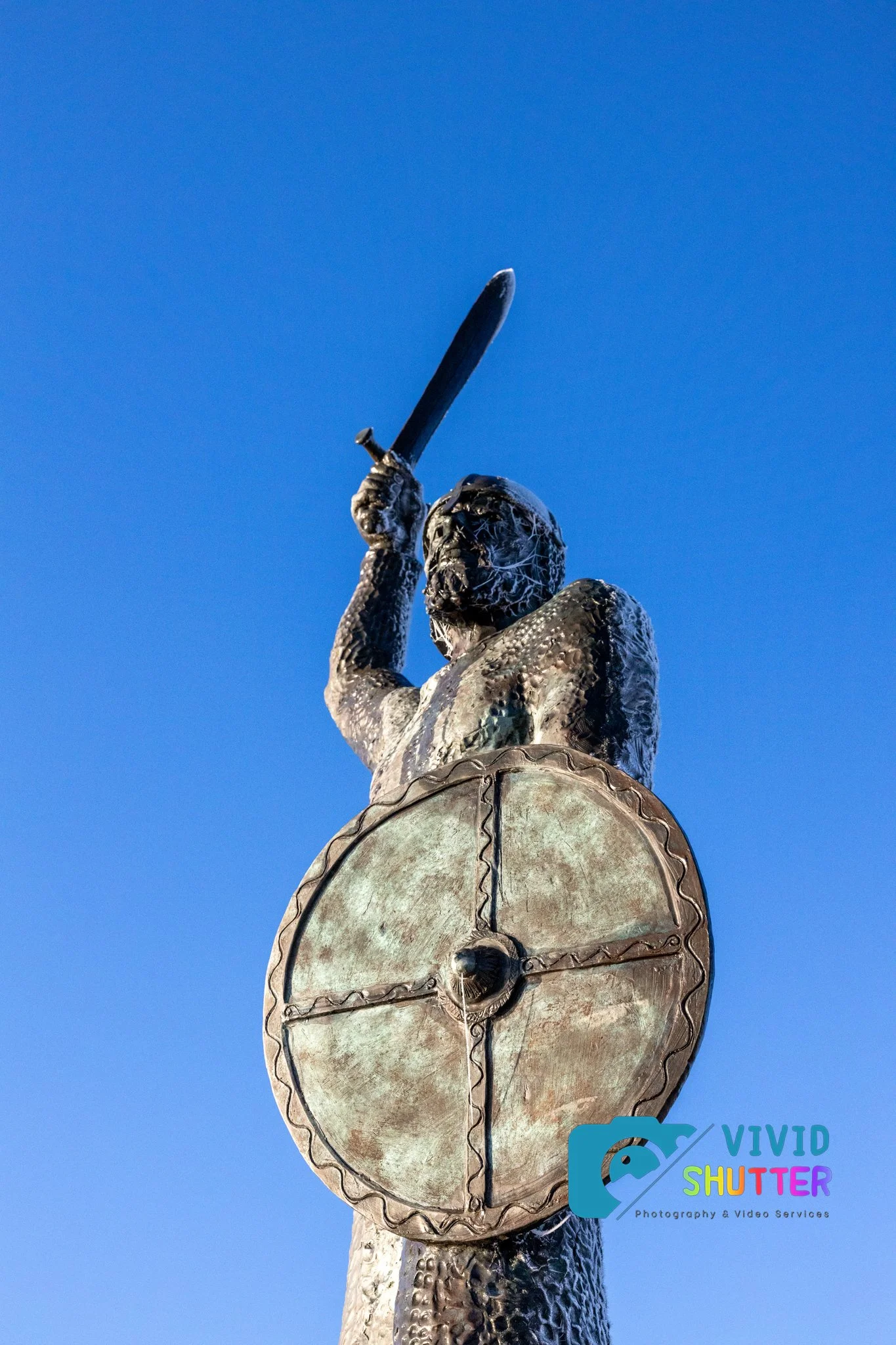
The statue of Earl Byrhtnoth in Maldon, Essex slowly thawing in the early morning sun.
Why Beginners Love Minimalism
Minimalism is perfect for beginners because it helps you learn the basics of composition, light, and balance, without worrying about too many technical settings.
It trains your eye to see what’s truly important in a scene and helps you understand how space and shape can make a photo feel peaceful, elegant, or powerful. Plus, you can practice anywhere like your garden, a local high street, even your kitchen table.
5 Easy Tips to Start Shooting Minimalist Photos
1. Focus on One Subject
Keep your photo simple by highlighting a single object or detail. This could be a flower, a person, a cup of coffee, or even a shadow on a wall.
Tip: On your phone, tap on your subject to make sure it’s sharp and in focus.
2. Use Negative Space
Negative space is the empty area around your subject, like sky, walls, or open water. It helps your subject stand out and adds calmness to the image.
Try placing your subject off-center for a more balanced, artistic feel.
3. Simplify Colors
Minimalist images often use just one or two colors. Look for clean backgrounds and soft tones.
Black and white mode on your phone or camera can make shapes and light even more striking.
4. Play with Light and Shadows
Natural light is your best friend. Early morning or late afternoon light is soft and flattering during ‘Golden Hour’.
If you’re indoors, use window light or experiment with the way shadows fall across a surface, as they can make ordinary objects look dramatic.
5. Take Your Time
Minimalism isn’t about snapping hundreds of photos, it’s about being intentional. Move slowly, adjust your angle, and look for simple beauty in everyday things.
Sometimes the best photo is the one you almost walked past.
Editing for a Clean Look
When you edit your minimalist shots, keep things simple:
Crop out any distractions
Brighten the background if needed
Boost contrast slightly
Avoid over-saturating colors
If you’re editing your pictures on your phone, then apps like Snapseed, VSCO, or Lightroom Mobile are great for subtle, clean adjustments.
Building Your Minimalist Eye
Minimalism helps you see the world differently. You’ll start noticing shapes, lines, and patterns that you never paid attention to before, the way light hits a wall or the calm of an empty space.
With practice, you’ll begin to recognise that beauty doesn’t always come from complexity. Sometimes, it’s in the quiet moments, the soft colors, and the spaces between things.
Final Thought
Minimalist photography is more than a style, it’s a way to slow down and really see what’s around you.
So next time you’re out with your phone or camera, don’t look for more to capture, look for less. In that simplicity, you might find your most powerful photo yet.
