

Blog - no.20: Canon EOS R5 Mark II After One Year: A Real-World Review from Corporate and Commercial Use
Introduction
I have now been using the Canon EOS R5 Mark II as one of my main working cameras for a full year, covering corporate, commercial, industrial and event photography and video. Rather than a first impressions piece, this is a real-world, long-term look at how the camera performs when it is used week in, week out on client jobs, under time pressure and in a wide range of lighting conditions.
When I first got my hands on the R5 Mark II, my aim was to fully utilise this truly reliable hybrid camera that can handle high-resolution stills, fast autofocus, demanding video work and long shooting days, all while fitting into a professional workflow. After twelve months of use, thousands of images and many hours of video, I now have a clear picture of where this camera really shines and where its limitations lie.
This review is written for photographers and filmmakers of all experience levels, whether you are considering upgrading, moving to mirrorless, or simply curious about how the R5 Mark II performs outside of lab tests and marketing material.
Key Specifications
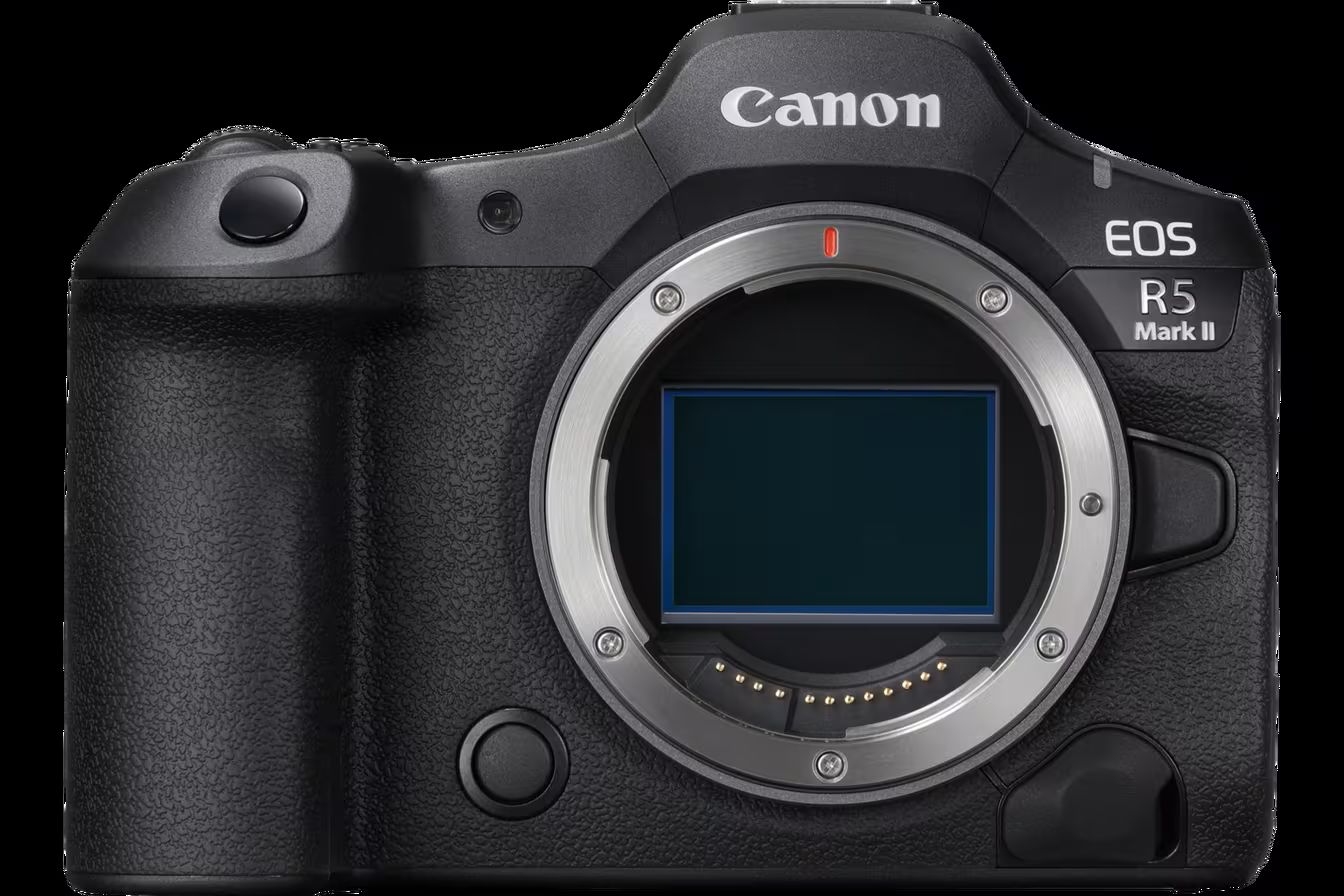
The Canon EOS R5 Mark II is built around a 45 megapixel full-frame stacked CMOS sensor, paired with Canon’s DIGIC X and DIGIC Accelerator processors. It offers:
45MP full-frame stacked sensor
ISO 100 to 51,200, expandable to 50 to 102,400
Up to 30 frames per second with electronic shutter, 12 fps mechanical
5-axis in-body image stabilisation rated up to 8.5 stops with compatible lenses
Dual Pixel CMOS AF II with advanced subject recognition and Eye Control AF
8K video up to 60p and 4K up to 120p
5.76 million dot electronic viewfinder
Fully articulating 3.2 inch touchscreen
Dual card slots, CFexpress Type B and SD UHS-II
Weather-sealed magnesium alloy body
Wi-Fi 6E, Bluetooth, USB-C and full professional connectivity
On paper, it is one of the most capable hybrid cameras Canon has ever produced, where you will also find the same XF-HEVC S/XF-AVC S formats that are used on Canons pro video cameras, as well as Clog2 and Clog3 formats for effective colour grading. I was particularly impressed to see that Canon had also included Clog2, as I think this is their best profile for recording and capturing great dynamic range and extra details in shadows.
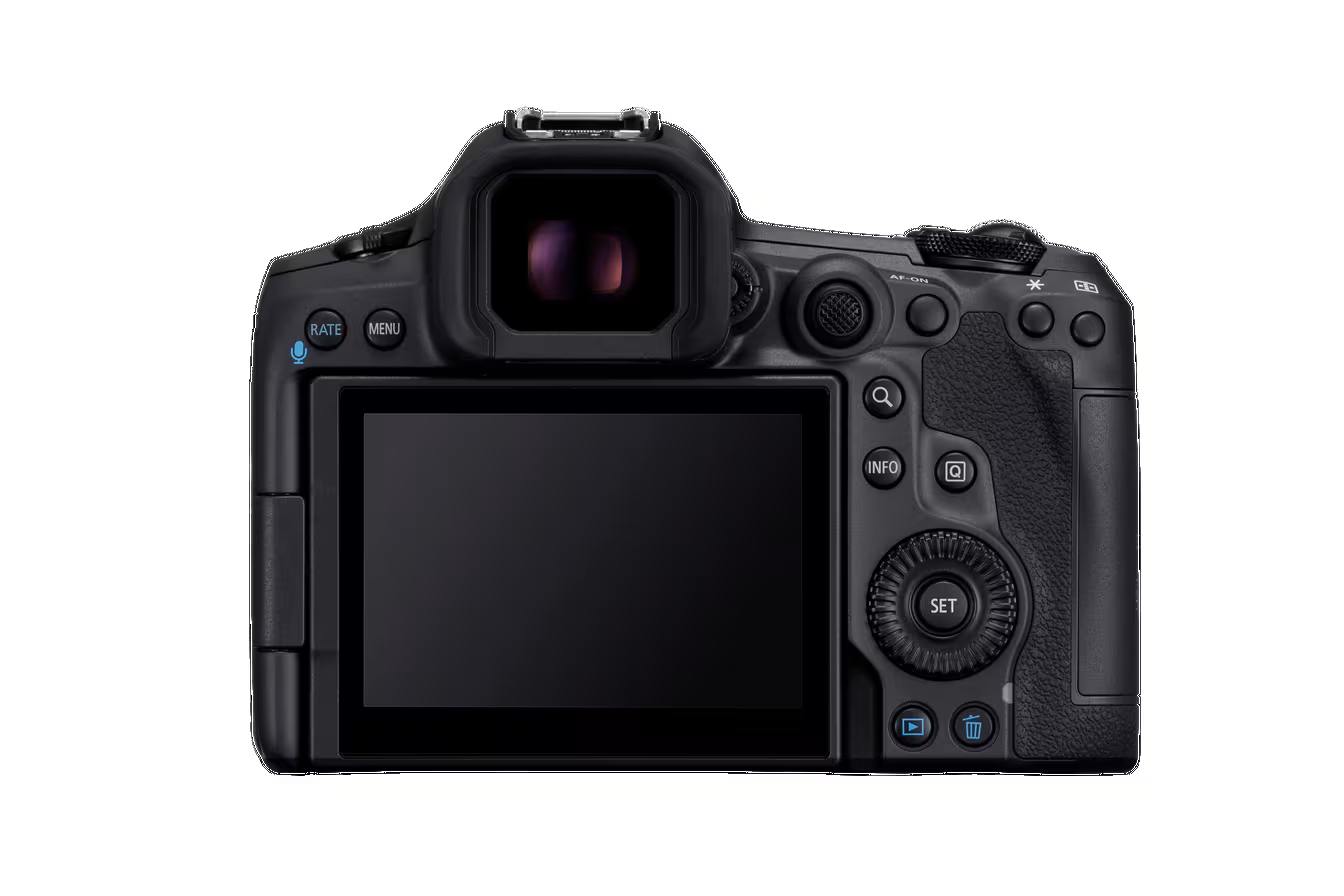
Image Quality After a Year of Professional Use
In day-to-day corporate and commercial work, image quality has been consistently excellent. The 45MP files offer a great balance between resolution and flexibility. They allow generous cropping for tight headshots from wider compositions, detailed product imagery, and large prints for marketing material, without becoming unmanageable in post-production.
Dynamic range is strong, particularly when working in high-contrast industrial environments or venue spaces with mixed lighting. Shadow recovery is clean, highlights roll off smoothly, and colour reproduction is very much in line with Canon’s well-known, pleasing colour science. Skin tones in particular remain natural, which is crucial for corporate portraiture.
The in-body stabilisation has been a genuine asset. Being able to hand-hold at slower shutter speeds for ambient-light event work has noticeably increased my keeper rate and reduced the need to push ISO unnecessarily too high.
Autofocus Performance in the Real World
Autofocus is one of the areas where the R5 Mark II truly earns its reputation. For corporate events, conferences and fast-moving environments, the subject detection and eye-tracking are impressively reliable. Face and eye detection lock on quickly, even in challenging lighting, and remain stable as subjects move across the frame.
The addition of Eye Control AF, once calibrated properly, is more than a gimmick. In situations where I need to move focus rapidly between subjects, being able to guide the focus point simply by looking at it through the viewfinder can be genuinely helpful and surprisingly intuitive after some practice. I also love shooting motor sports in my spare time and this eye control feature has proved invaluable when switching focus quickly between cars on the track.
For industrial and commercial shoots, where precision focusing on specific details is essential, the AF system is both fast and accurate, with minimal hunting.
Video Performance and Hybrid Workflow
Video is where the R5 Mark II takes a significant step forward from the original R5. The 8K and high-frame-rate 4K options provide enormous flexibility for cropping, stabilising and reframing in post. The improved heat management means the camera is far more dependable for longer recording sessions, which is vital for interviews, corporate presentations and behind-the-scenes coverage.
Canon’s colour profiles, combined with features such as waveform monitoring and false colour, make exposure control far easier and more consistent. The camera integrates smoothly into a professional video workflow, especially when shooting solo.
Autofocus in video is smooth and confident, particularly for talking-head interviews and corporate pieces where eye-tracking keeps subjects sharp without distracting focus pulls.
Handling, Ergonomics and Reliability
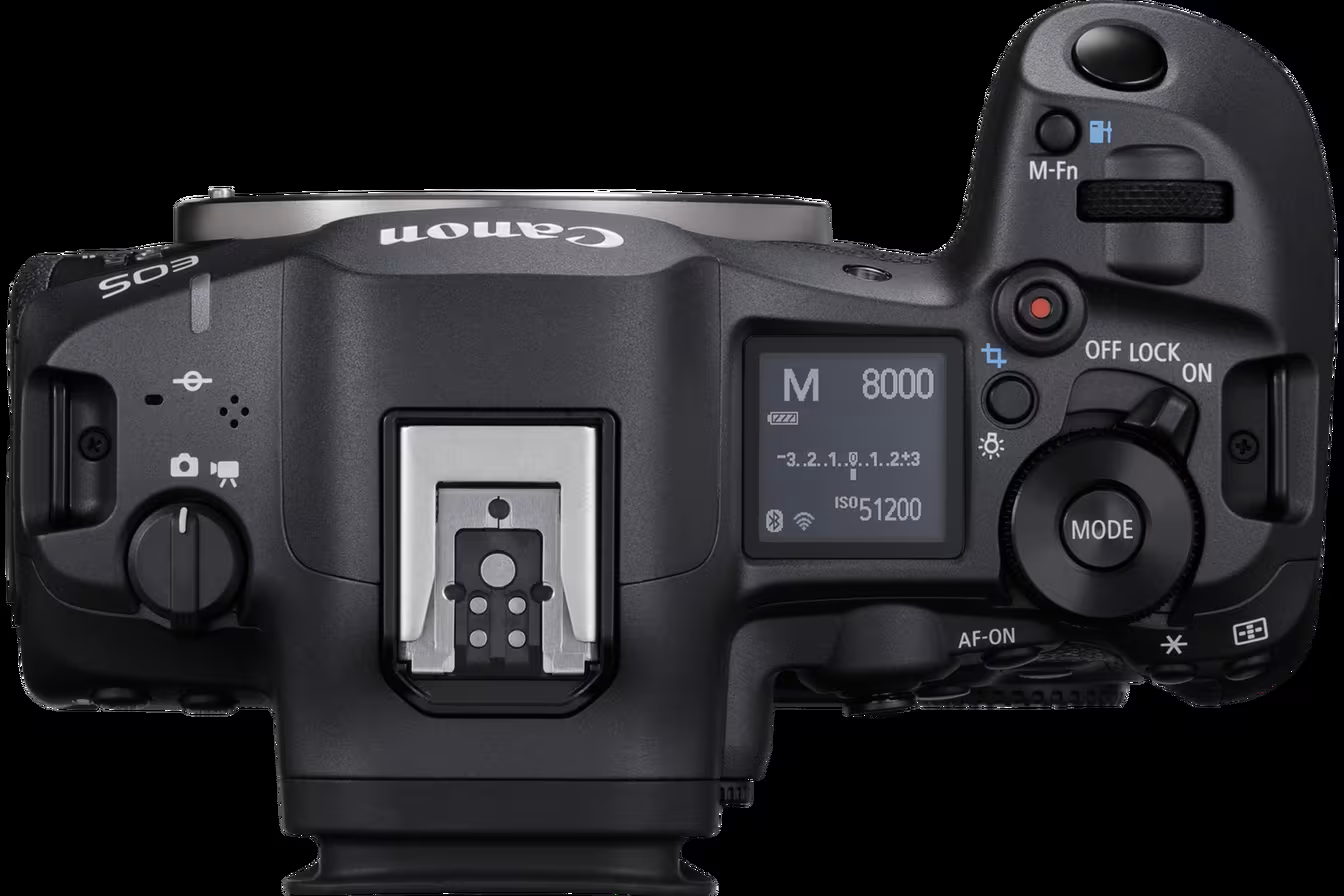
From a handling perspective, the R5 Mark II feels familiar to anyone coming from Canon’s professional DSLR or mirrorless bodies. The grip is comfortable for long shooting days, button placement is logical, and the fully articulating screen is invaluable for video and low-angle work.
Weather sealing has proven robust during outdoor shoots and event coverage in less-than-ideal conditions. Reliability has been excellent, apart from one unexpected shutdown in extreme cold conditions where I am fairly convinced it was the battery that caused the performance issue and was fixed by warming the battery up. So one battery situation across a full year of regular professional use has not affected my faith and trust in this camera body.
Battery life is reasonable rather than exceptional, as expected with a high-performance mirrorless camera. For full-day shoots, carrying spare batteries is essential, and now standard practice for most modern systems. I do not own any of the three types of battery grips for the R5 Mark II, as I am not shooting long video clips, so I cannot comment on the addition of these to the system.
What Could Be Better
No camera is perfect, and the R5 Mark II is no exception. The file sizes are large, which demands fast cards, plenty of storage and a capable computer for smooth post-production. The menu system, while comprehensive, can feel complex at first, particularly when diving into advanced video settings and custom functions. But compared to other camera systems it still feels the easiest menu system to navigate and has a very useful custom section at the end which you can programme with your favourite/most used settings to make things easier to find in a hurry.
From a stills-only perspective, some photographers may feel the upgrade over the original R5 is evolutionary rather than revolutionary. The biggest gains are in speed, autofocus refinement and video performance, rather than dramatic changes in base image quality.
The price also places this camera firmly in the professional bracket, so it is an investment that only really makes sense if you will make full use of its capabilities, of which there are many. I would definitely not recommend this as a starter camera, as you will not use half of its features which then makes this model difficult to justify financially (unless money isn’t an issue).
I would also like Canon to continue to enhance the capabilities of this camera through firmware updates, which have been overhyped and sparse for the R5 Mark II. There has been so much speculation and rumours of great firmware updates that Canon were allegedly looking at releasing like 4k 60fp oversampled mode and an Open gate full sensor recording option, but alas we are now 18 months post the launch of the R5 Mark II and no nearer to getting these.
What Other Professionals Are Saying
Across reviews and user feedback, the R5 Mark II is widely praised for its versatility, class-leading autofocus and strong hybrid performance. Many photographers and filmmakers highlight the stacked sensor’s speed, the reliability of subject detection and the significant improvements to video overheating and usability.
Common critiques tend to focus on cost and the fact that, for purely stills-focused shooters, the advantages over the original R5 may not justify the upgrade. For hybrid shooters, however, it is frequently described as one of the most complete all-round cameras currently available.
Who Is the Canon EOS R5 Mark II For?
After a year of professional use, I would say the R5 Mark II is ideally suited to:
Corporate and commercial photographers who need high resolution, accurate colour and dependable autofocus
Event photographers who rely on fast, reliable tracking and low-light performance
Industrial photographers working in challenging lighting and environments
Hybrid shooters who need both high-quality stills and advanced video in one body
Professionals who want a future-proof system capable of handling demanding client work
Final Thoughts After One Year
The Canon EOS R5 Mark II has proven itself to be a highly capable, reliable and genuinely versatile tool for professional corporate, commercial, industrial and event photography and video. It combines excellent image quality, outstanding autofocus, strong video performance and solid handling into a single, well-rounded system.
After twelve months of real-world use, it has become a camera I trust on paid assignments, where consistency and reliability matter as much as outright technical performance. It is not the cheapest option on the market, but for those who need a true hybrid workhorse, it represents a strong long-term investment.
If you are considering the R5 Mark II, my experience suggests it is a camera that not only impresses on paper but continues to deliver in everyday professional use.
